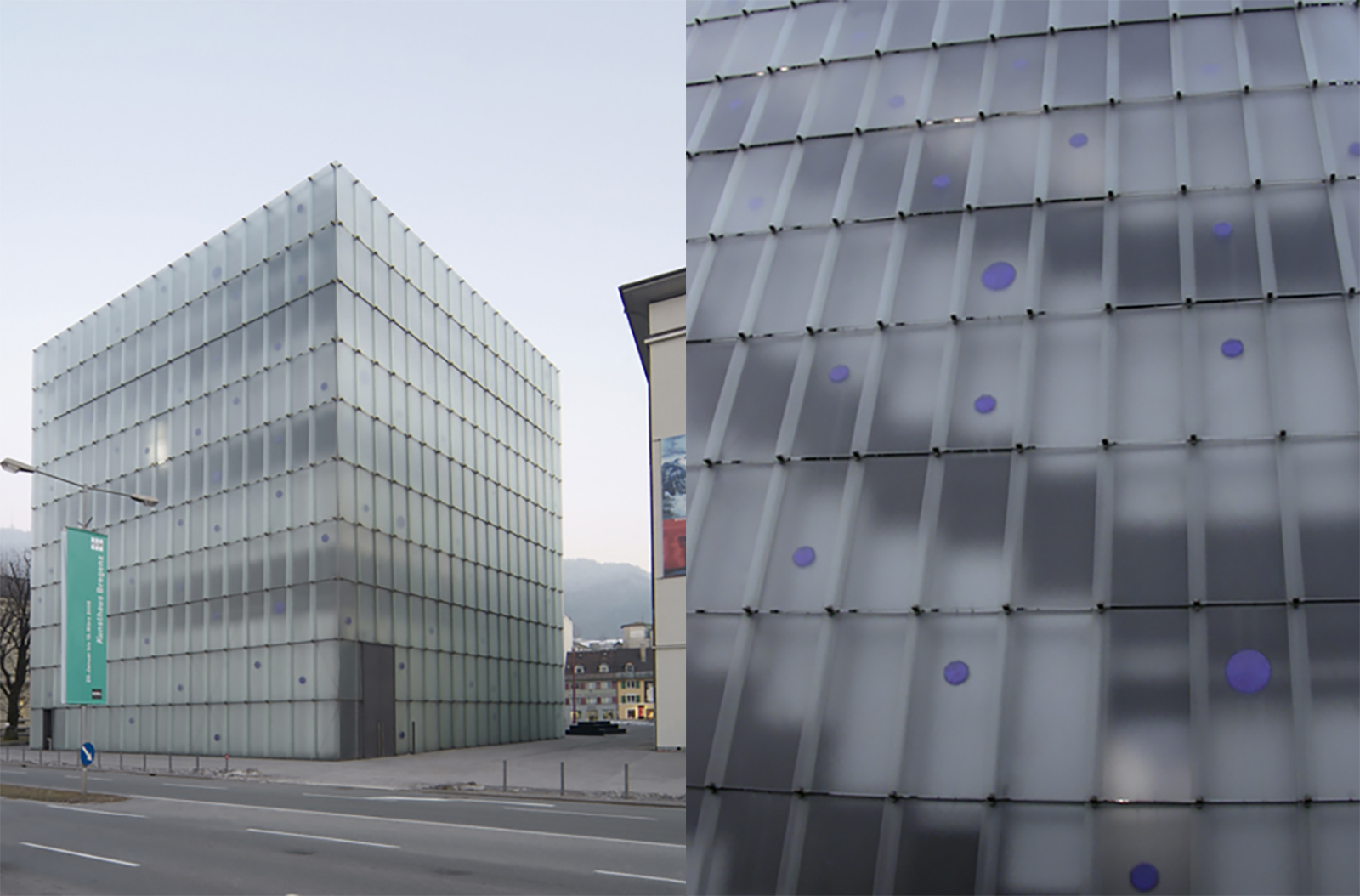
During day, the basins floated within the double frosted glass facade like helium-filled balloons.
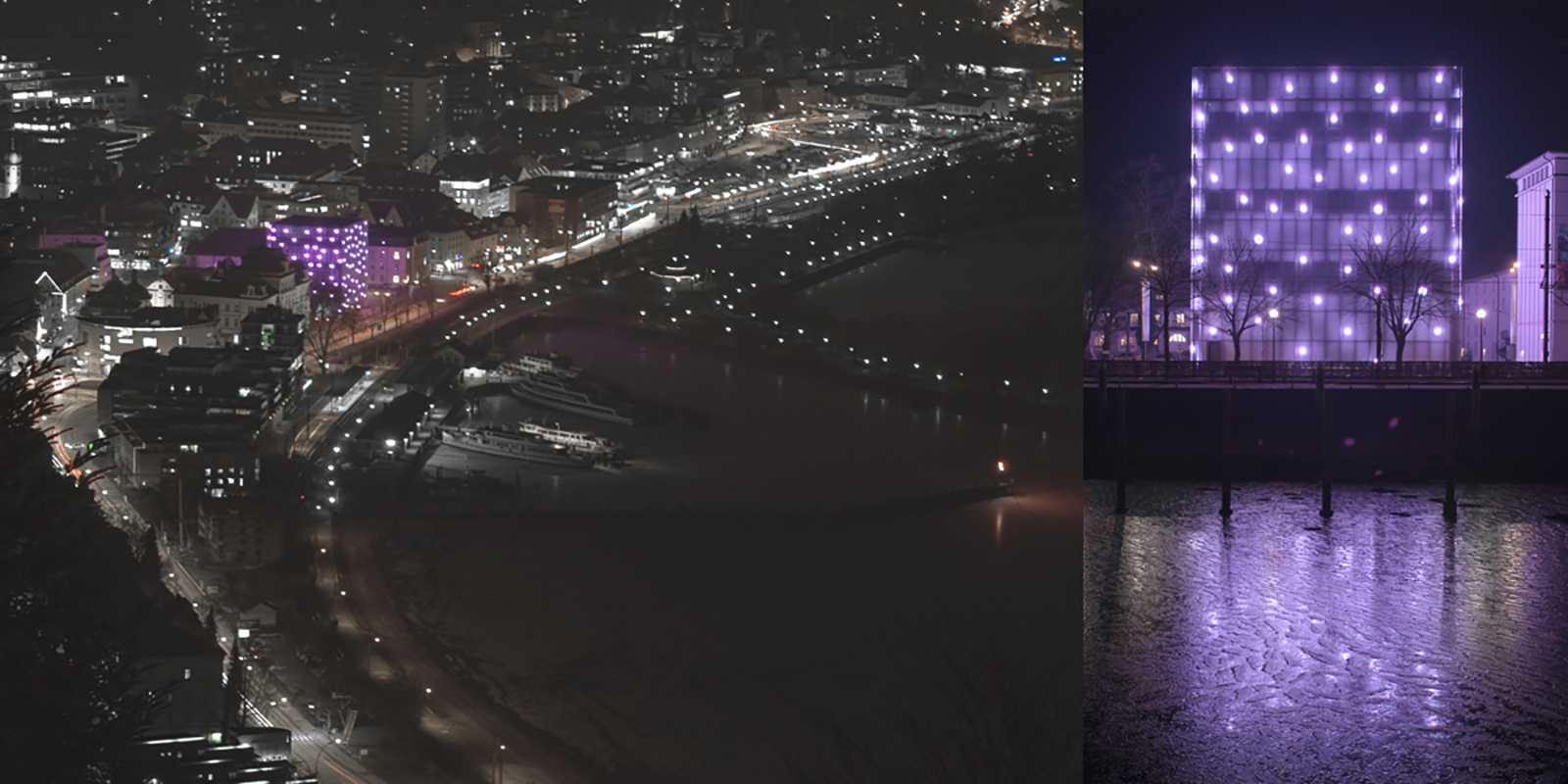
At night, they ablazed with crisscrossing bursts of light, inspired by the pyrotechnics of fireflies.
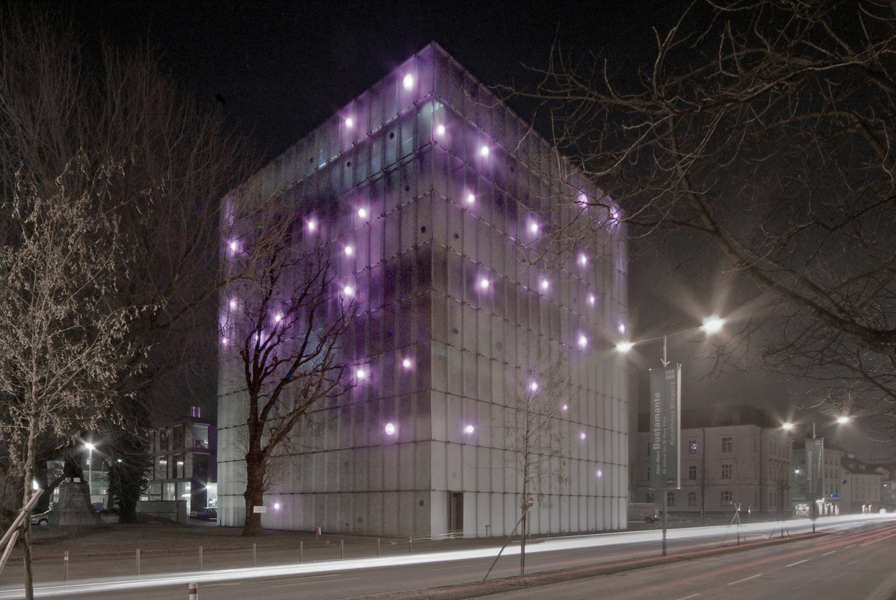
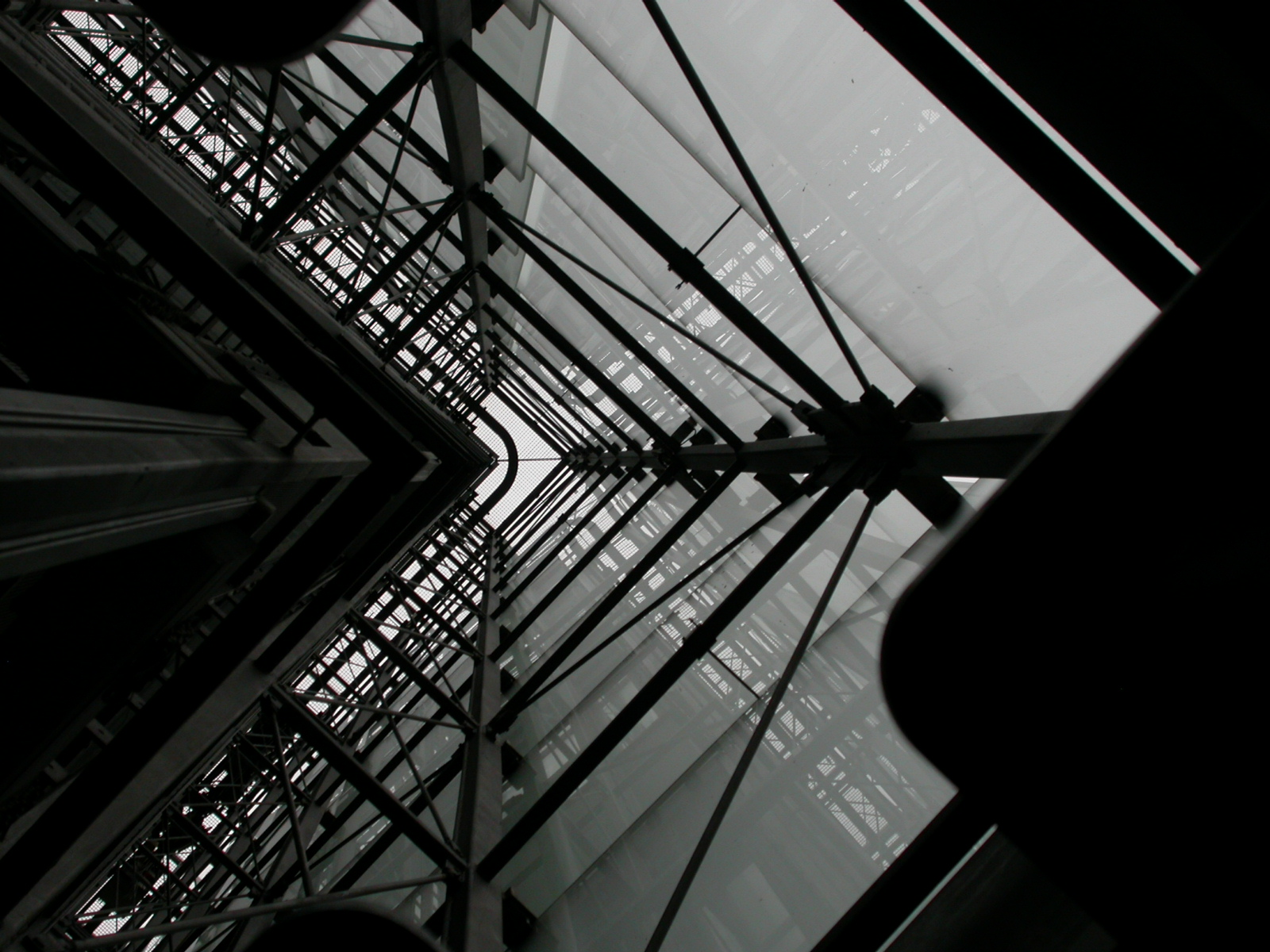
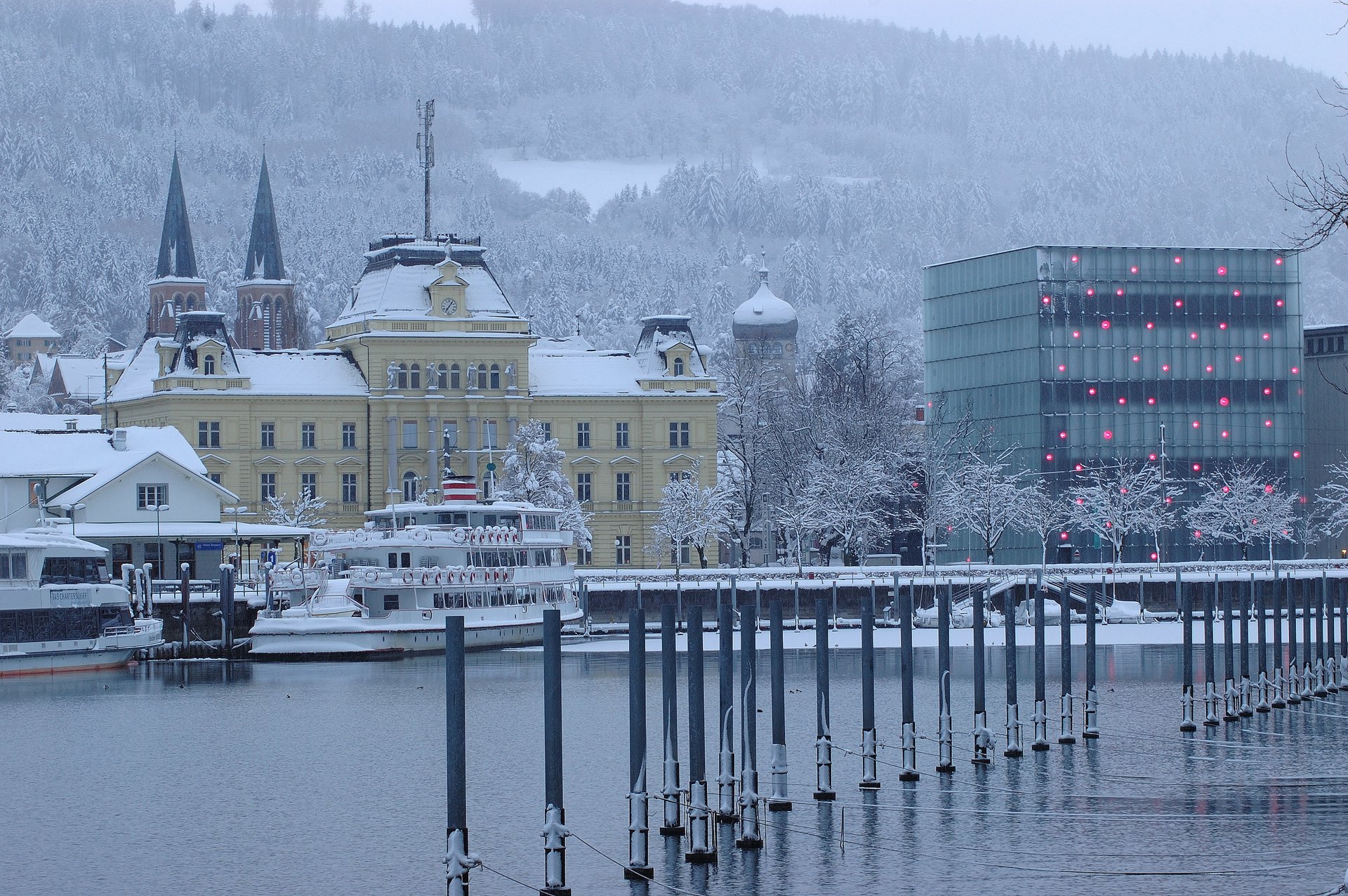
A total of 200 lamps, suspended within the structure and positioned behind the frosted glass panels, transformed the façades into an abstract representation of indistinct patterns that constantly shifted throughout the night.
Most of the time, only a few points of light flickered on and off slowly, each animated by its own unique rhythm and intensity. Occasionally, small, isolated flashes disrupted the overall changing rhythm of the nebula. Depending on its intensity, the color of each lamp varied from reddish-pink to violet-blue, passing through mauve, offering a fluctuating palette with each breath of light in the glass. These changes seemed to occur randomly, and no logical system could be discerned, even after prolonged observation of the installation.
It conveyed an overall impression of great vulnerability and a muted, almost slow-motion vibration. At irregular intervals, the facade would suddenly turn crimson at full intensity. It was always a surprising moment. Diffusing the surrounding light, the building silently set its environment ablaze with color. This illumination was then visible from afar, from neighboring villages and the peaks of the surrounding mountains. The reflections on the water were particularly striking, whether viewed from across Lake Constance or approaching the building from the harbor. The residents of Bregenz, the Vorarlberg region, and visitors to the KUB appreciated the installation and its enigmatic delicacy, linked to an underlying tension. It was the talk of the town, and many wished it could have remained in place.
Dr Rudolf Sagmeister, curator Kunsthaus Bregenz.