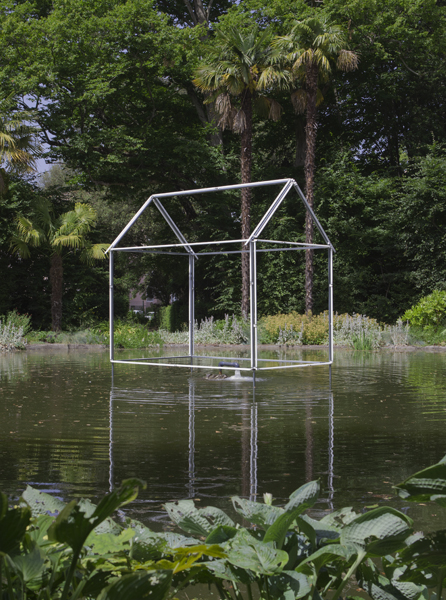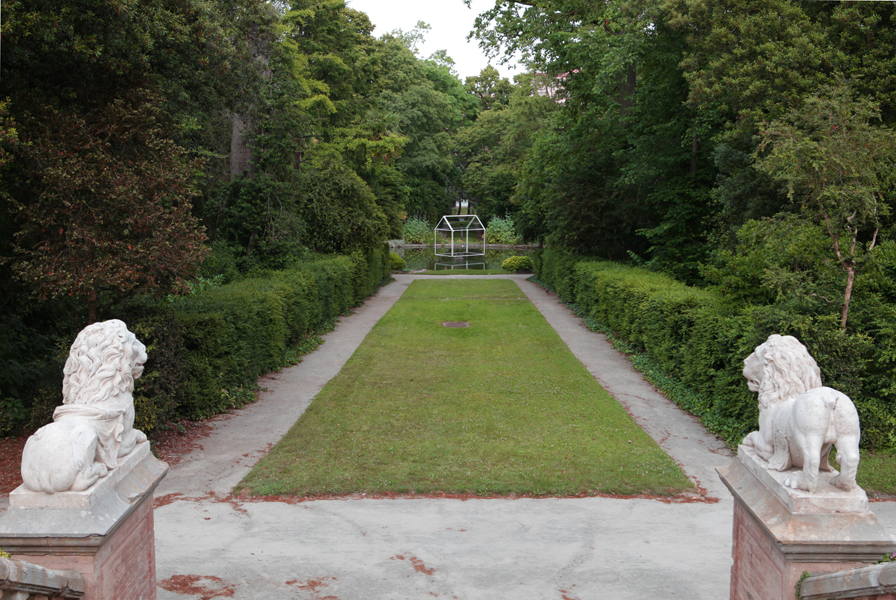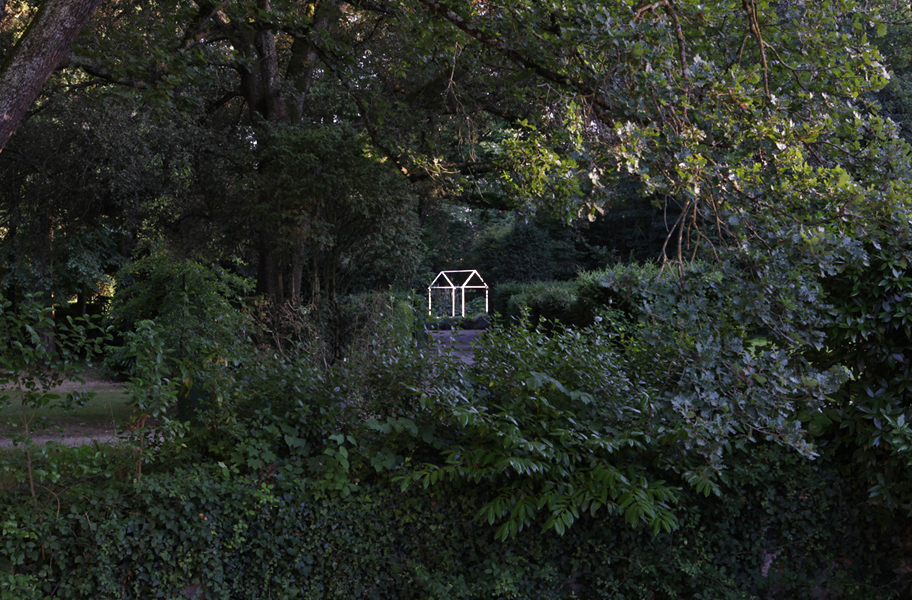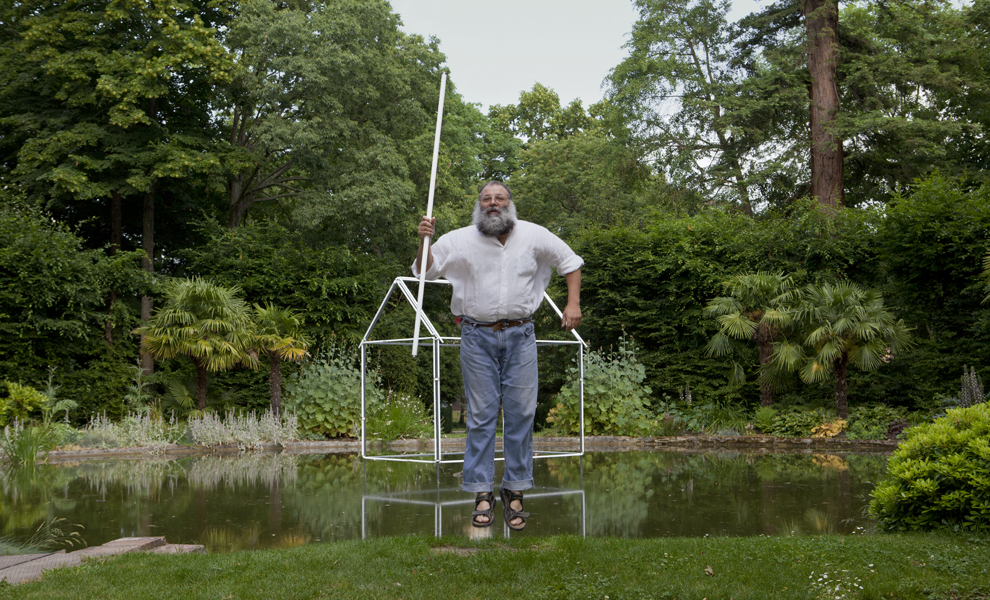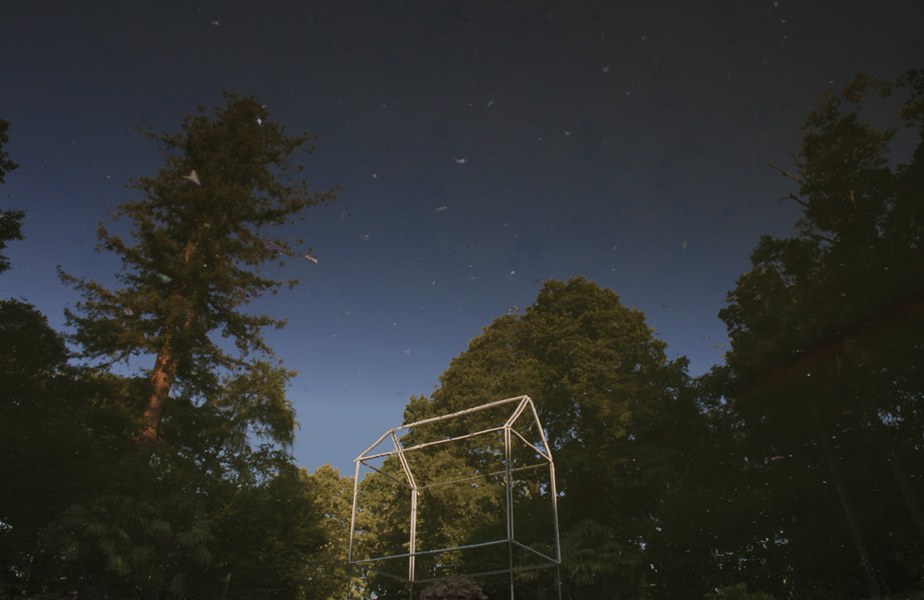
The project involved using discarded fluorescent tubes from various sources: industries, shops, garages, private residences, public buildings, streetlights, etc., recovered from a recycling center. These end-of-life products, having completed their “missions” before being dismantled, transformed, and recycled for reuse in the manufacture of other products, were introduced (or reintroduced, in some cases) into the public space as relics imbued not with electrical currents, but with the “memory” of their original locations and uses. Brought together in a single location, they generated an unexpected poetic proposition. The resulting shelter-house was thus composed of several memories placed side by side, shared, to form an independent work, a kind of contemporary still life created through subtraction and addition. The artwork rendez-nous la lumière (give us back the light) could itself be interpreted as a symbol of a community, and more broadly, of the “mother house,” the “Earth-house.”
This “preservative work,” as I often like to call it, playing on words, it was intrinsically linked to the question of ecology, especially since it was installed in the middle of the pond in the Reynerie garden in Toulouse, whose water level was deliberately set at the point of close overflowing. One could also detect in it reminiscences of the collective unconscious, such as the childhood playhouse, a place for experimentation, games, and the first intimate space, sheltered from the gaze of adults, in this clearing in the garden, which only reveals itself fully when one enters it.