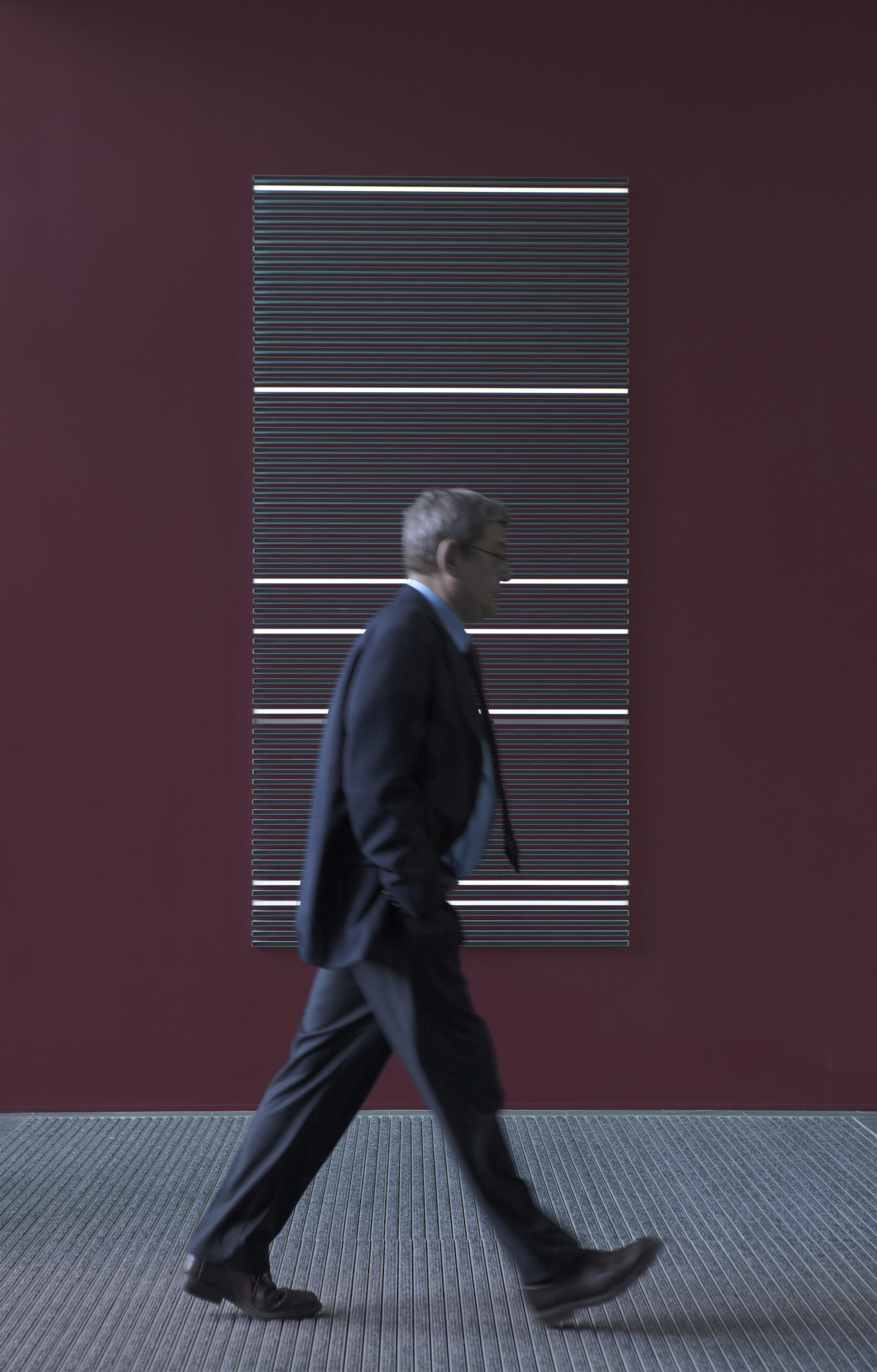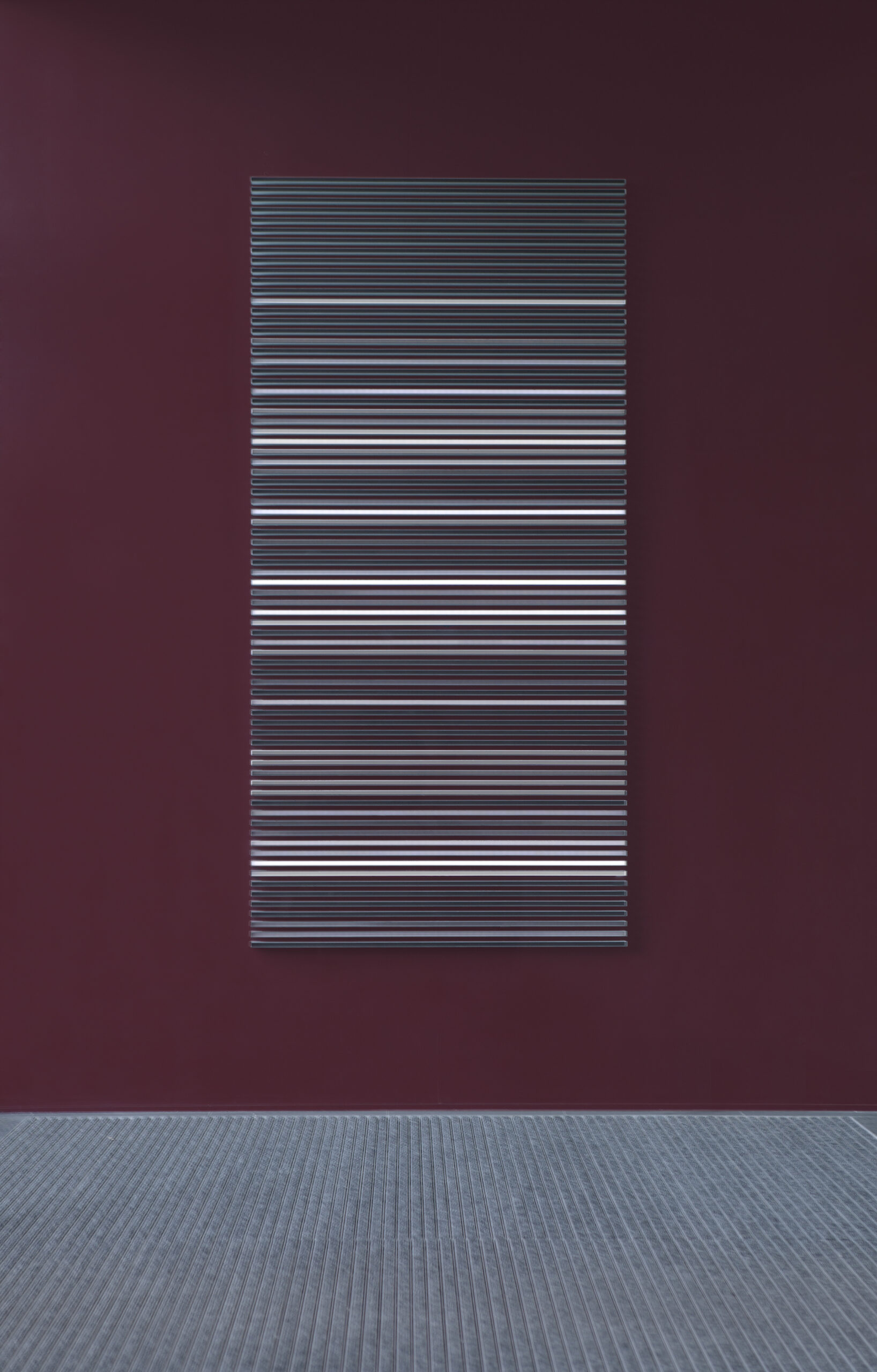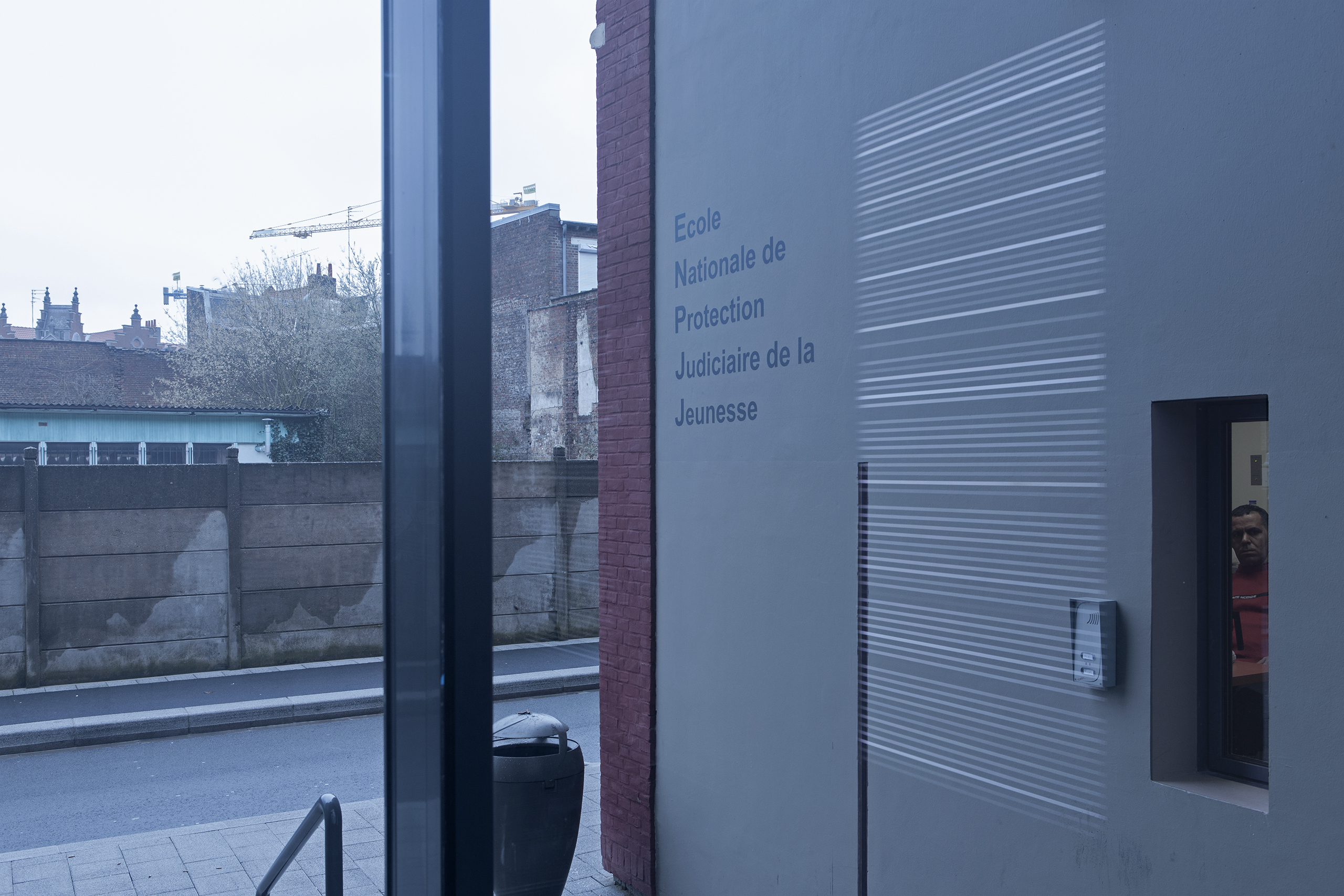
This artwork is part of a diptych for a public building in Roubaix.
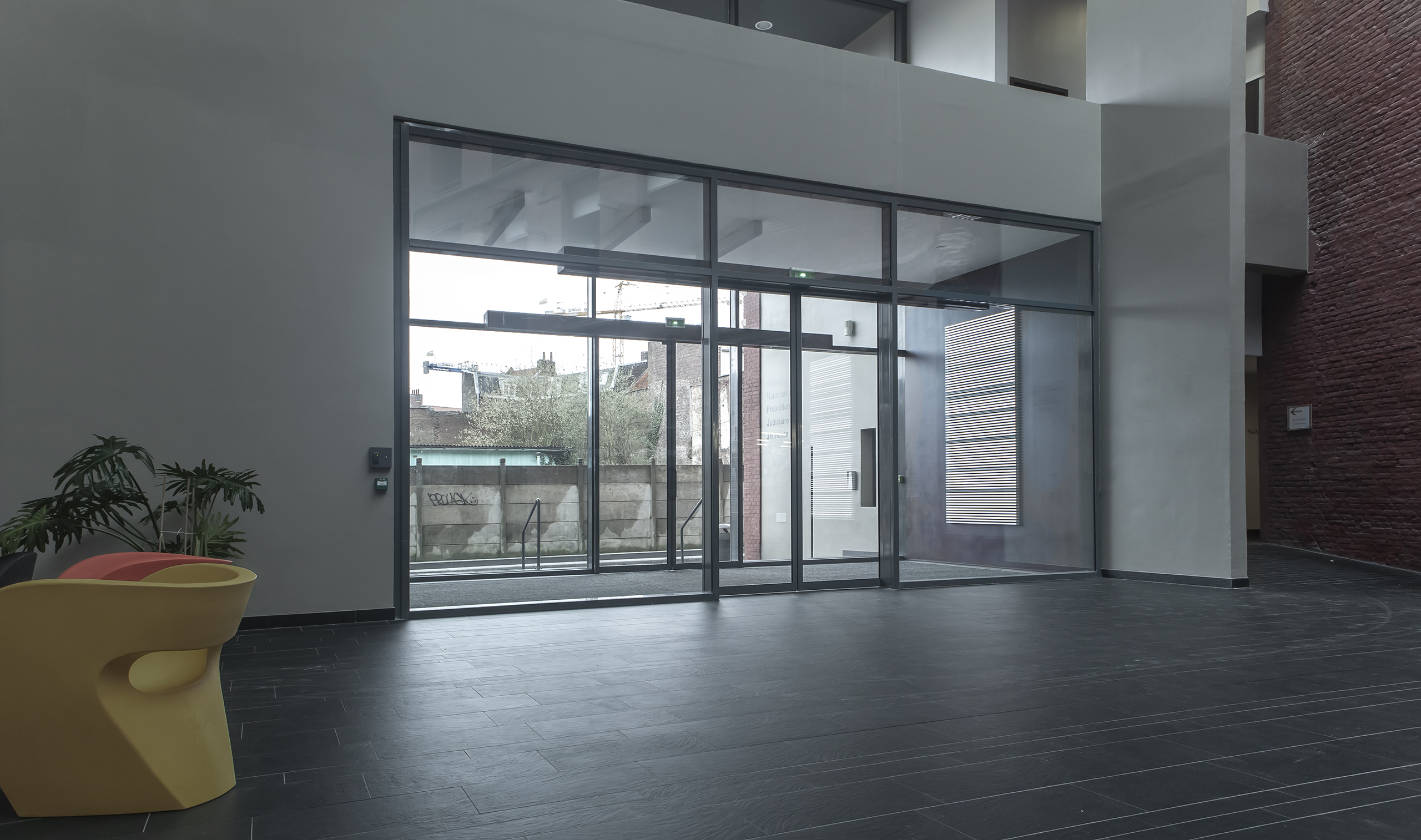
The two works of this diptych are located in a former spinning mill converted into a public building. They highlight references and cross-references to art history (the minimalists Carl Andre and Donald Judd), kinetic art of the 1970s, the first industrial loom invented in England, the history of the site itself and its uses, and the architecture of the new building extension, created to expand the spaces for this National School for the Judicial Protection of Youth (ENPJJ).
The energy produced by the photovoltaic wall artwork is consumed in real time by the building. An electric meter is read annually, and the number of kilowatts produced by this artwork is fed back into the software managing the electrified light, fading jenny 0 to 100, which distributes it into 2-hour increments for the following year. The versatile and generative light installation can, depending on the random subprogram launched in segments, exhaust its energy quota before the end of a segment and thus remain inactive, switched off until the start of the next two-hour segment.
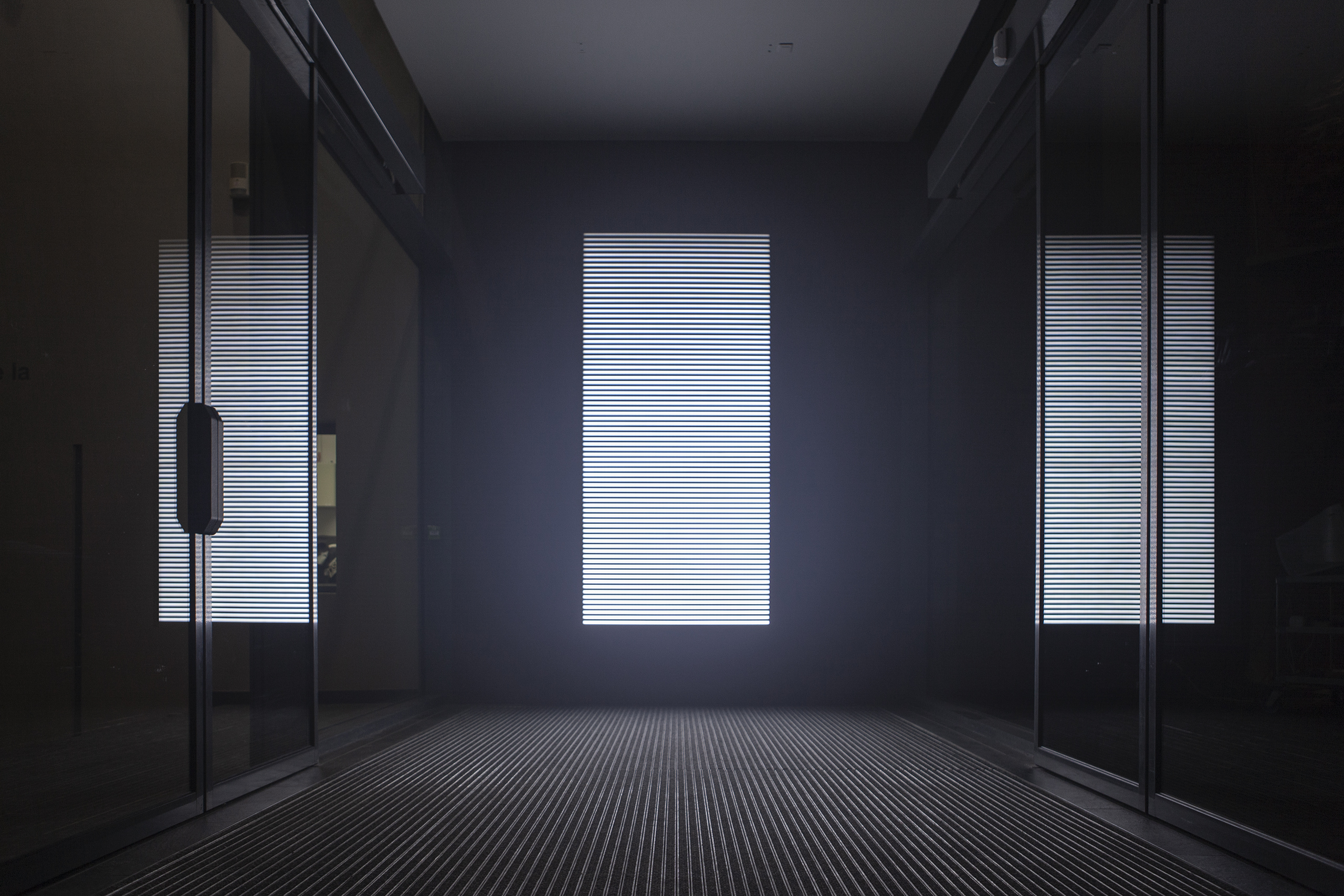
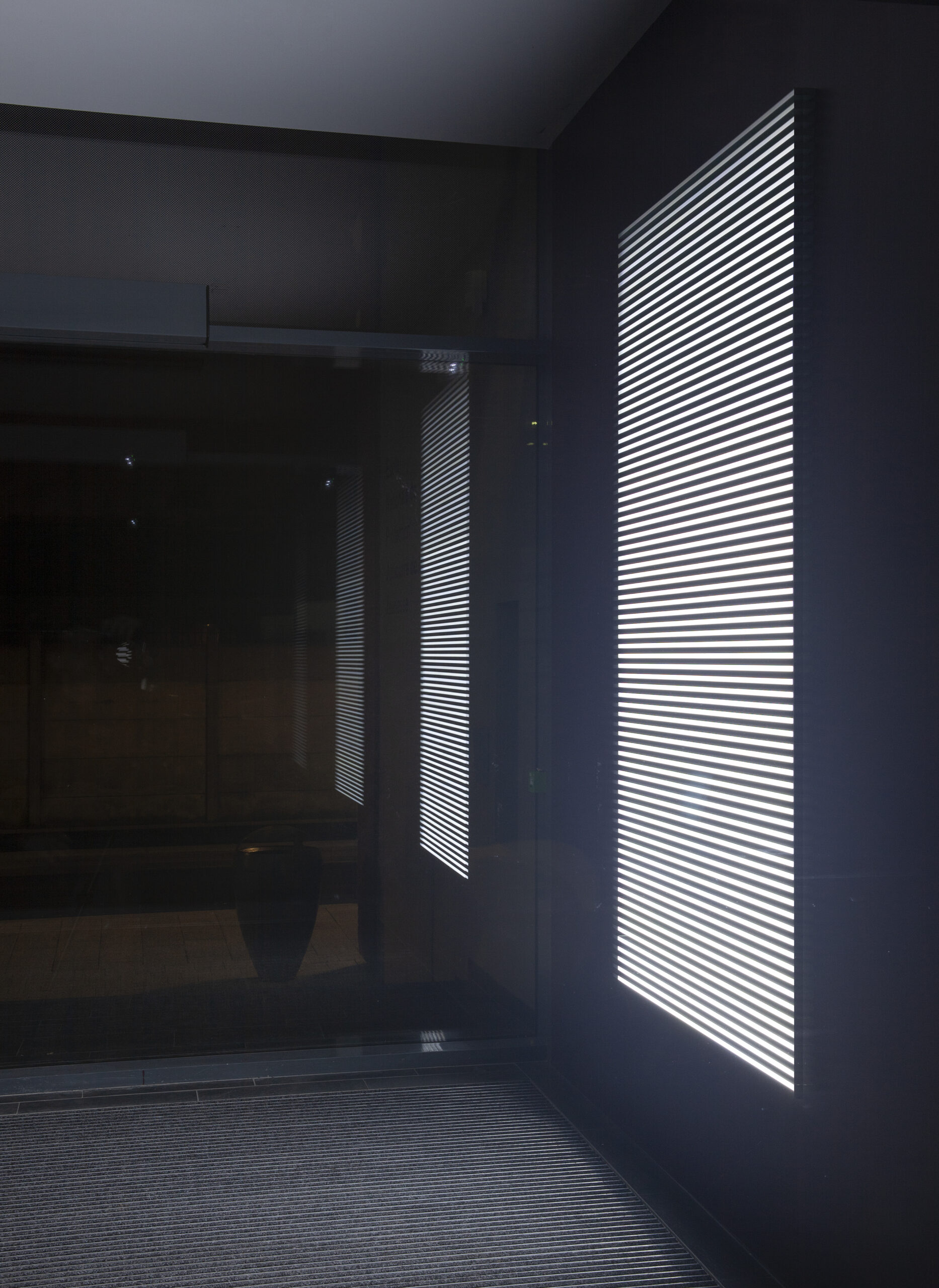
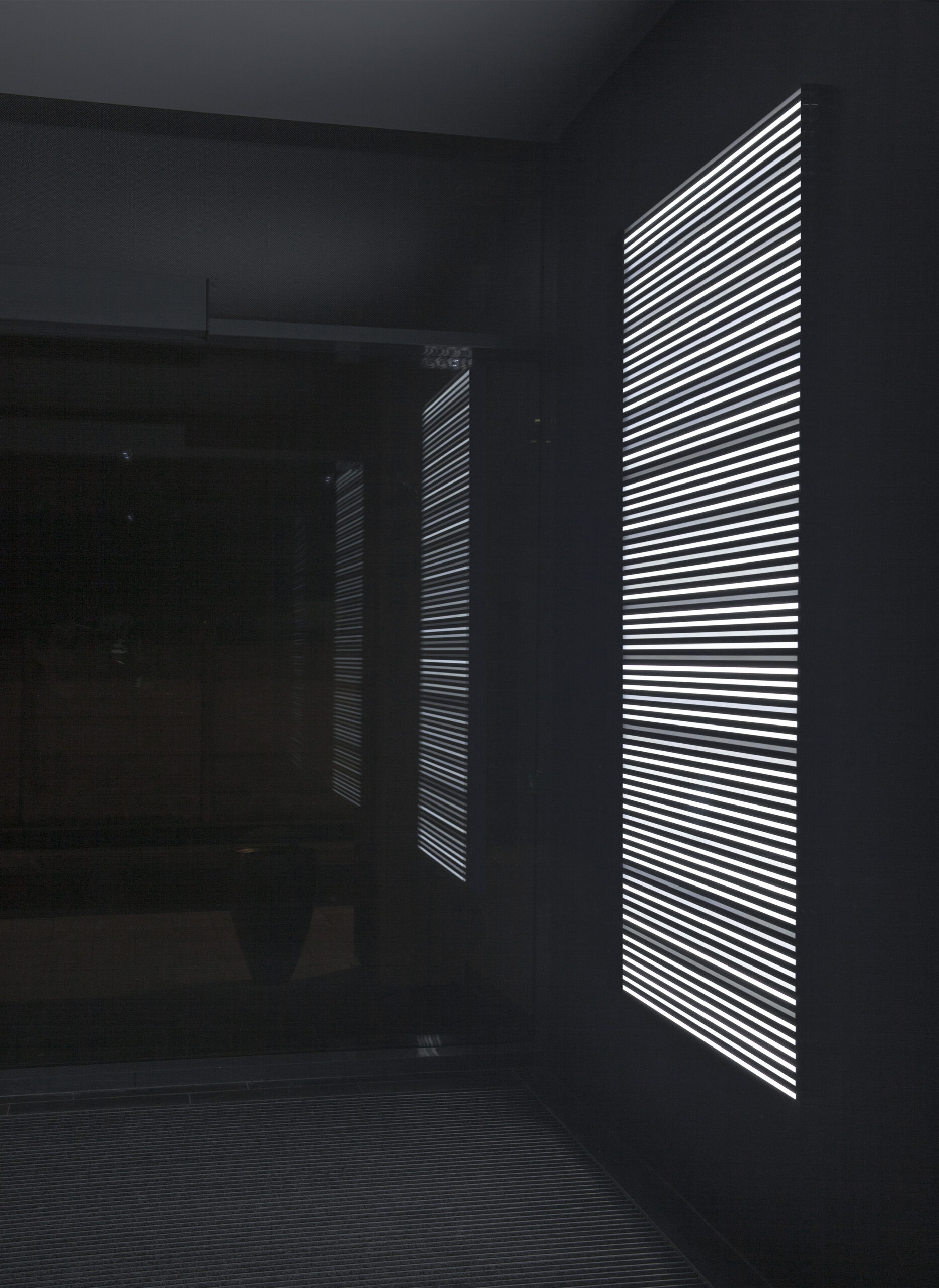
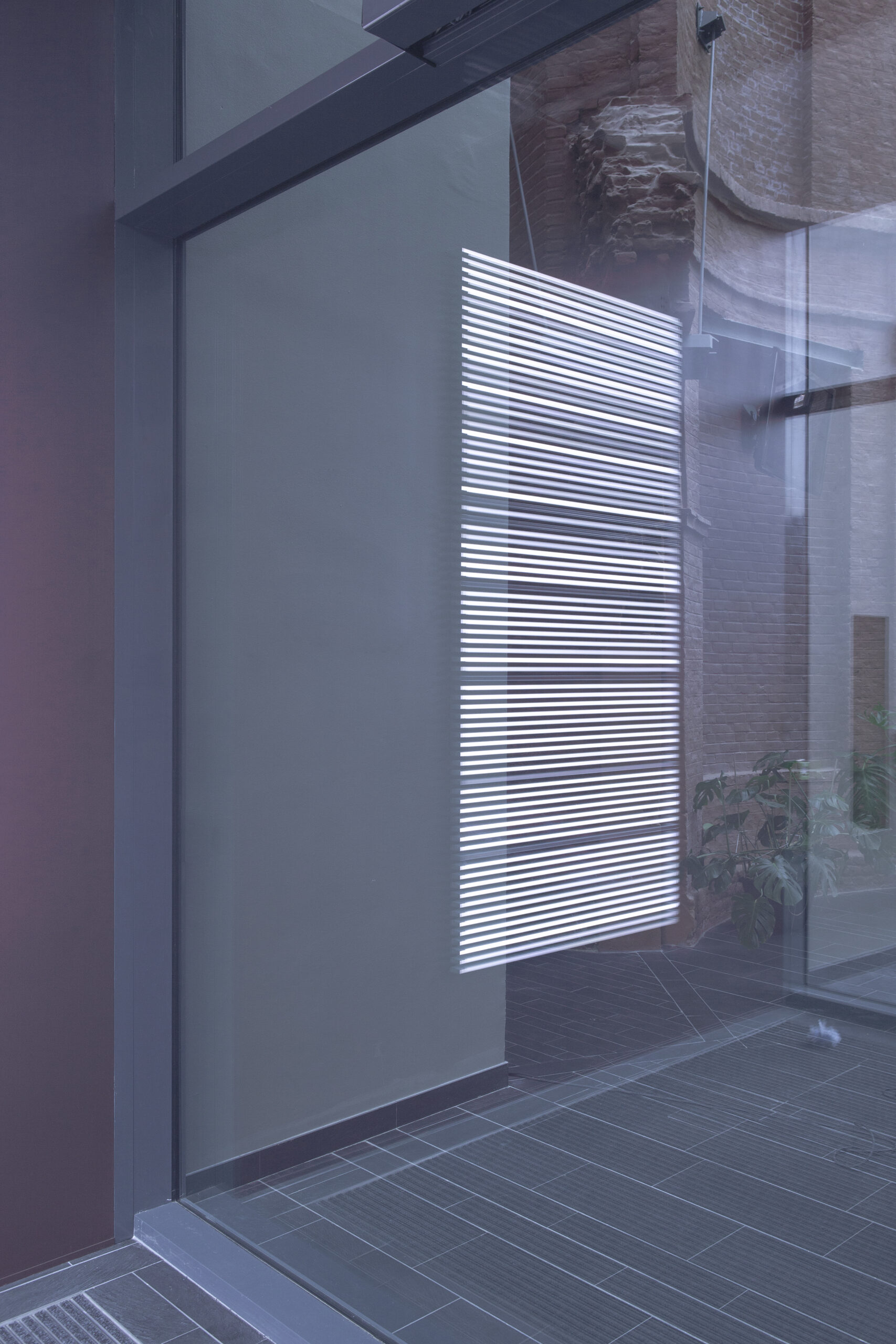
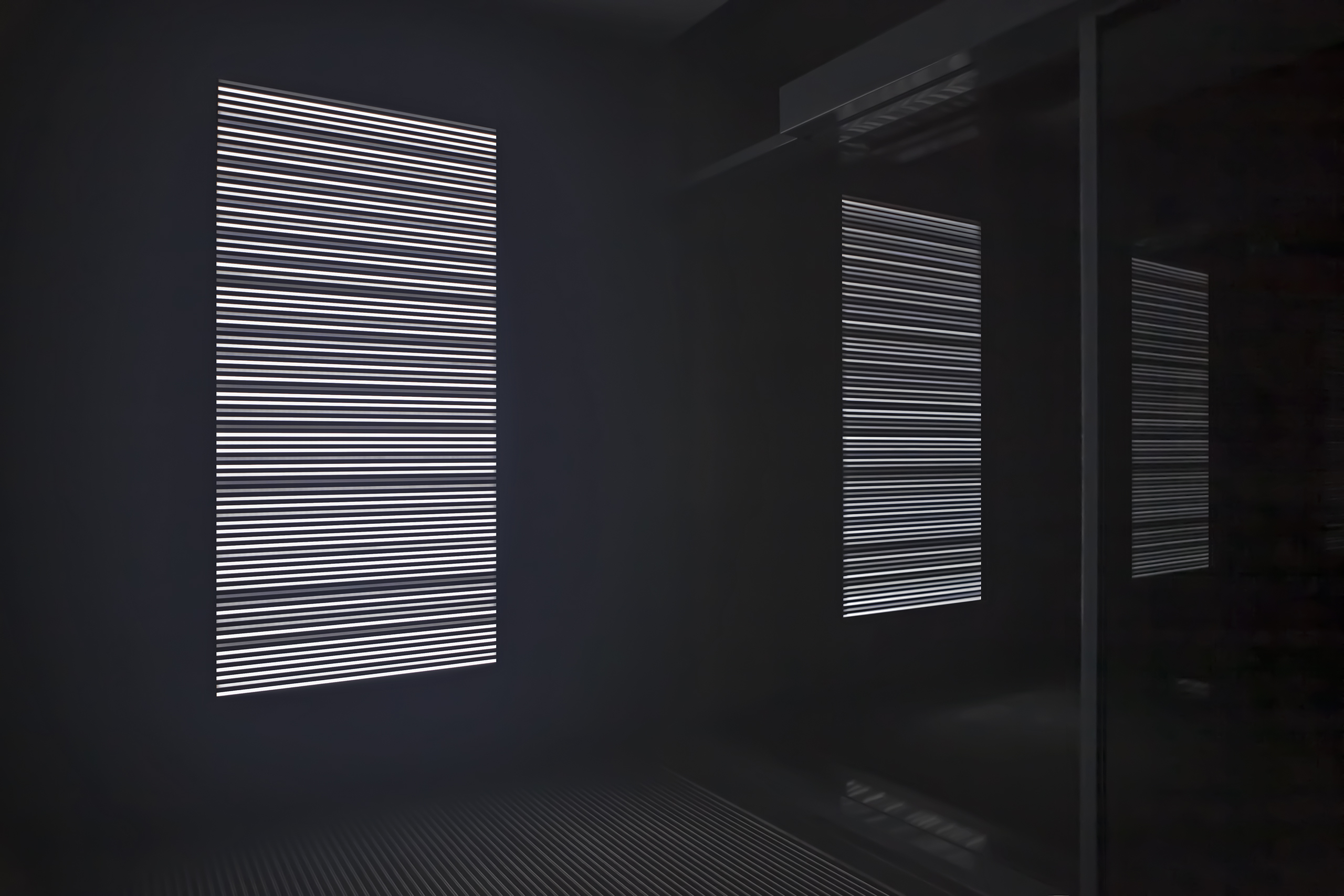
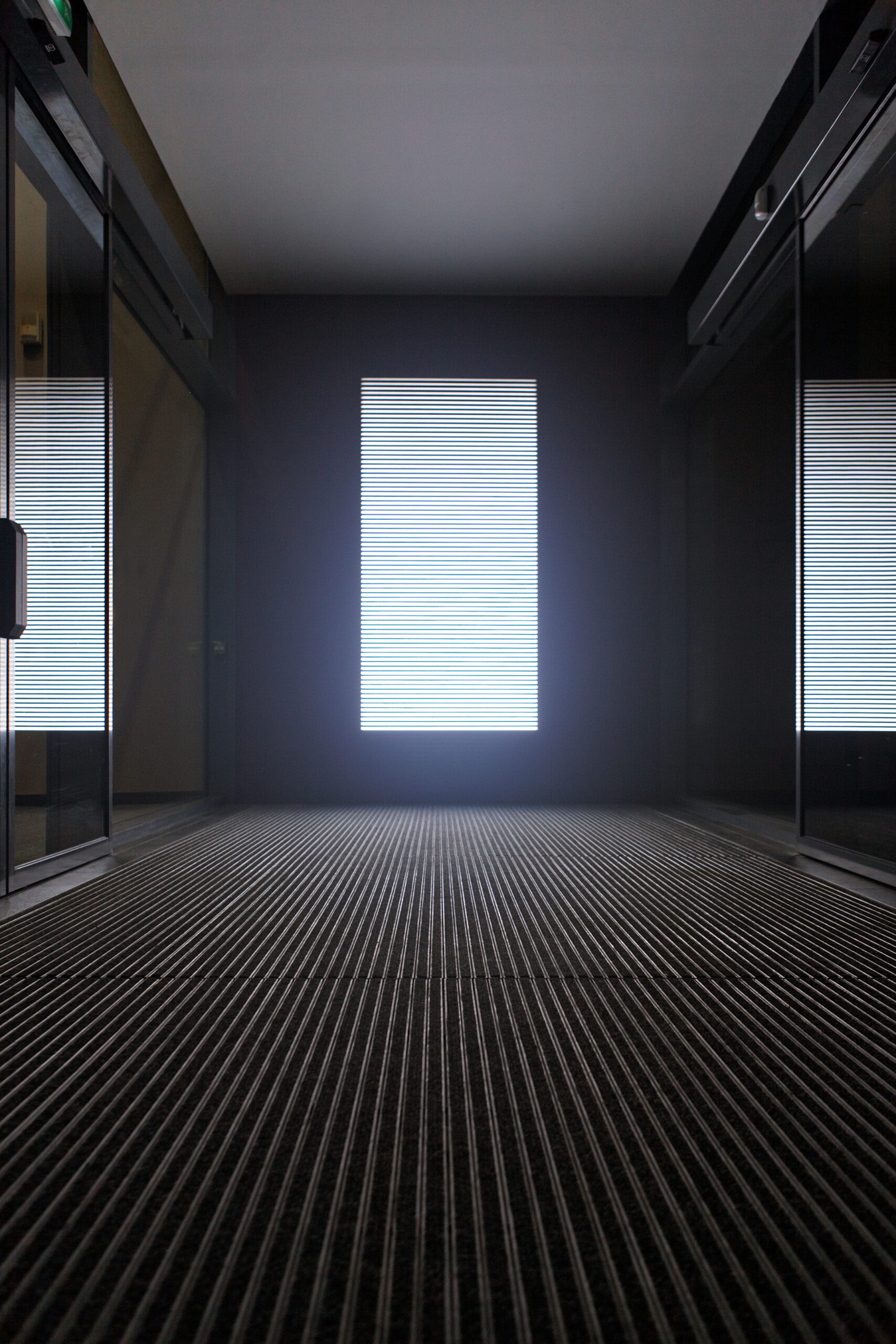
Placed in the vestibule, and therefore visible from both inside and outside the building day and night, the light installation forms a phenomenological entity and uses several more or less random subprograms that intertwine often slow rhythms inspired by the pyrotechnics of fireflies. The installation resonates with the site’s industrial past (a former spinning mill with bricked-up windows) and operates through a mise en abyme within the vestibule’s bays, and more simply, through a play of symmetry with its carpet.
At night, the light is no longer confined to the surface of the installation. It floods the vestibule, and the two glass surfaces create a stronger mise en abyme effect.